


Do I have to fill in forms?
No. Say it or type it however it comes out, for example “coffee 4.50 at Starbucks”. Papirer works out the amount, the date and the category, and learns from your corrections.
A practical way to track your spending with text, voice and receipts, without giving any app access to your bank. Papirer only knows what you tell it. No ads, no tracking and no selling your data.
Linking your bank sounds like the easy way, but it means handing over access to your transactions, and it still misses part of what you spend. Logging it yourself has its own advantages.
You never hand your bank username or password to an app. Papirer never asks for them.
Cash, several cards, what you pay a friend back, a purchase abroad. If you paid for it, you can log it.
It does not matter whether yours is supported, and there is no connection to re-authorise every so often.
Logging it yourself, even if it takes two seconds, is what keeps it in mind the next time.
When you pay, say or type “coffee 3.50”, or snap the receipt. Papirer picks out the amount, the date and the category, and adds it to your diary.
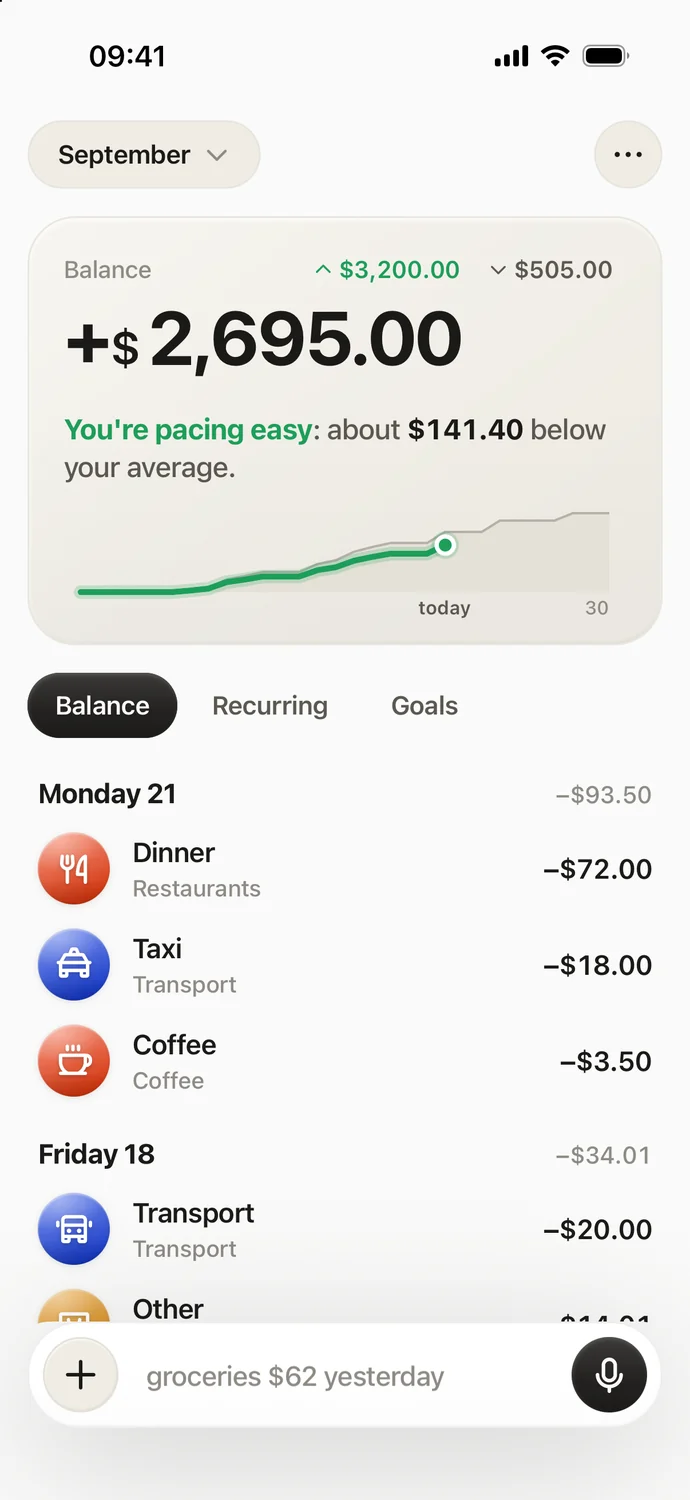
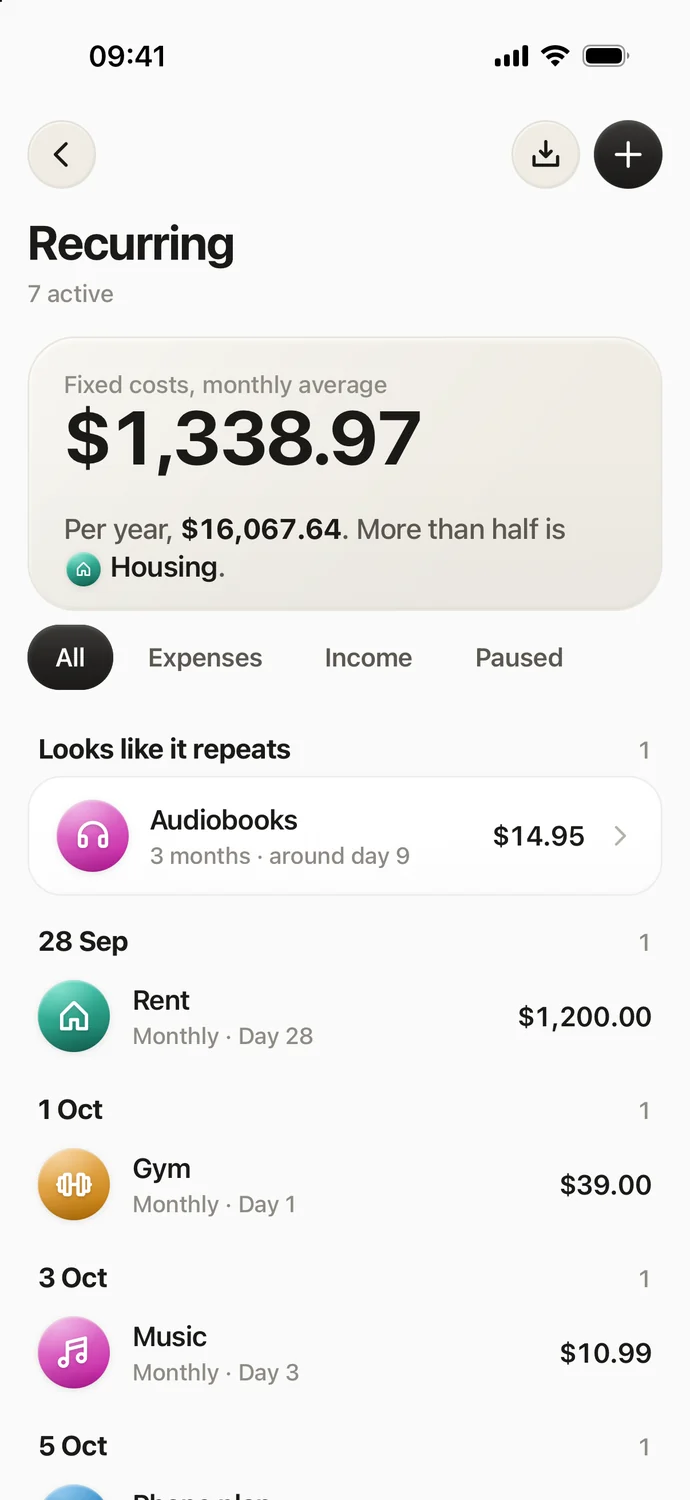
Rent, utilities, internet and subscriptions are set up a single time as recurring entries. After that they log themselves on their date.
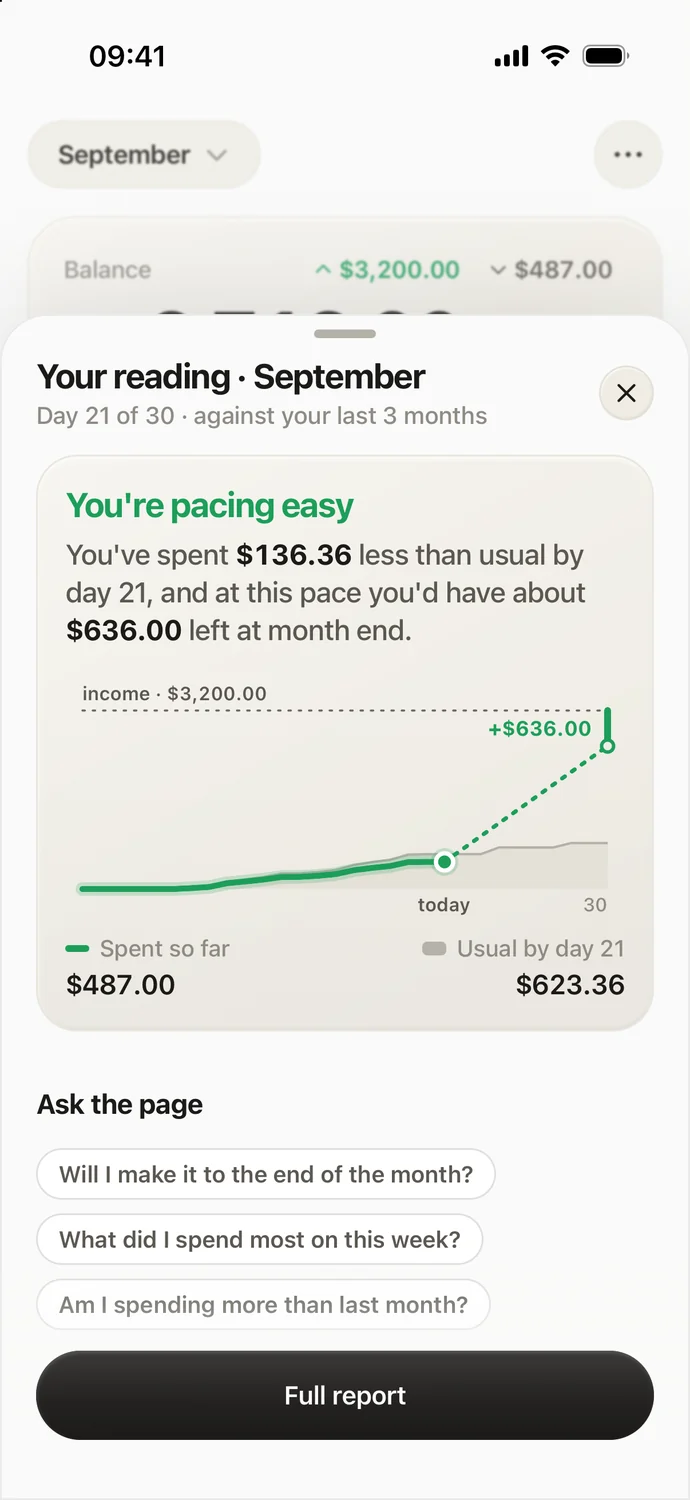
The reading compares what you have spent with what you usually spend, and counts the fixed costs still to come. You know whether you have room before the month ends.
Neither way captures everything. This is what you gain and what you give up with each.
| What we compare | Without linking your bank | Linking your bank |
|---|---|---|
| What you share | What you log. No bank login, no transactions. | Your transactions and balances, through a service that accesses your bank. |
| Cash and payments between people | They go in like any other expense. | They are missing, or arrive without saying what they were for. |
| Banks and countries | Any, including when you travel and pay in another currency. | Only the supported banks. |
| Effort | A few seconds per expense. | Automatic, with categories you still have to check. |
| What slips through | Whatever you forget to log. | Whatever you pay outside those accounts. |
If a month ends up half logged, in Papirer you can mark it as incomplete so it does not skew your averages.
No. Say it or type it however it comes out, for example “coffee 4.50 at Starbucks”. Papirer works out the amount, the date and the category, and learns from your corrections.
No. Papirer never reads your bank transactions: it only records what you tell it. You can export everything or delete your account whenever you like.
Anything you want to know about your money: whether you can afford something, where most of it went this week or whether you’re spending more than last month. It answers from your entries, with a chart when it helps.
Yes. Ask it to move, fix or delete entries and it shows you the change before making it. If you change your mind, you undo it.
Plan monthly income, expenses and savings. Download an Excel budget template or CSV, or print your budget as a PDF.

See what’s left after spending and saving, how much you can spend per day, and download your month’s plan.

Split your income into needs, wants and savings with the 50/30/20 rule. Adjust the percentages and compare the result with your current spending.
Split a bill or shared expenses between friends, roommates or a couple: equally, by income or with custom weights.

Split rent equally, by room size or by income. Add household bills and see how much each person pays.

Calculate fuel costs from distance and consumption. Add tolls and parking, then split the trip cost between the people travelling.

Record everyday expenses, set recurring payments and follow your goals in Papirer.